A general ledger built for real complexity.
Multi-entity, multi-currency financials with real-time consolidation. General ledger, payables, receivables, cash flow planning and statutory reporting all in a single governed environment — no spreadsheet bridges, no nightly batch.
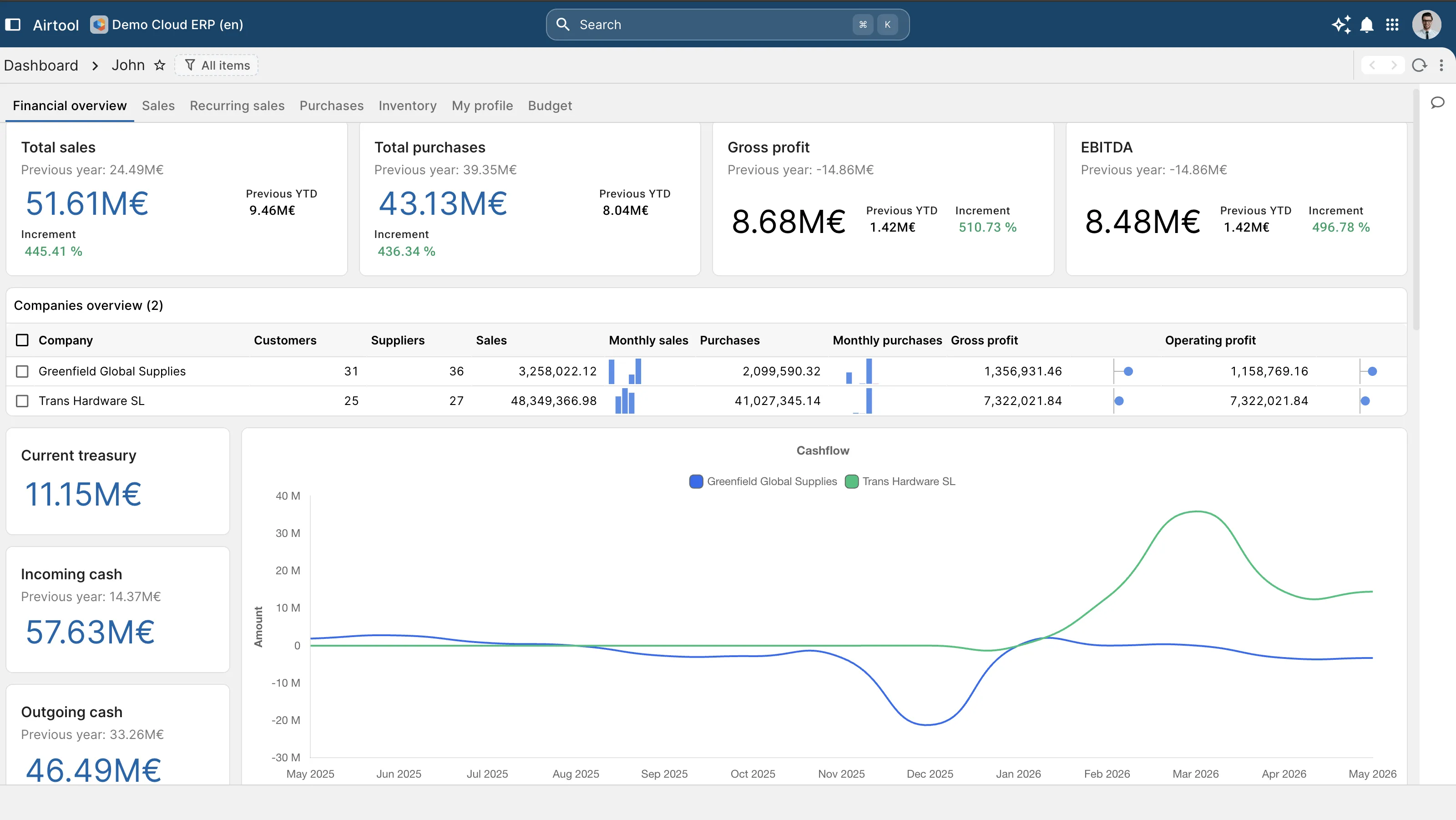
One ledger across entities
Group consolidation with automatic intercompany elimination. Currency revaluation on a configurable cadence. Statutory and management views from the same data, side by side.
Audit-grade by default
Every journal, reversal, allocation and approval captured with preparer, reviewer and timestamp. Compliance reviews answered in SQL, not paper-trail archaeology.
Live close, no reconciliation tax
Period-end close runs against live ledger data. Subledger to general ledger reconciliation is structural, not a separate job.
AI inside the perimeter
Anomaly detection, expense classification and natural-language reporting under the user's role-based access controls. Every suggestion auditable.
The ledger that records every transaction the business runs.
Group, entity and division structures modelled in the metadata repository. Intercompany eliminations applied automatically during consolidation. No quarter-end Excel build. Exchange rates from configurable sources, applied on a configurable cadence — daily, monthly or transaction-time. Statutory and group currencies side by side on every report. Per-period close checklist with preparer / reviewer workflow. Subledger reconciliation jobs run live; the close is a sign-off, not a rebuild. Every journal — manual, recurring, system-generated — captured with the user, timestamp, source document and approval chain. Reversals leave the original intact.
- Multi-entity chart of accounts — Group, entity and division structures modelled in the metadata repository. Intercompany eliminations applied automatically during consolidation. No quarter-end Excel build.
- Real-time currency revaluation — Exchange rates from configurable sources, applied on a configurable cadence — daily, monthly or transaction-time. Statutory and group currencies side by side on every report.
- Configurable period-end close — Per-period close checklist with preparer / reviewer workflow. Subledger reconciliation jobs run live; the close is a sign-off, not a rebuild.
- Full audit trail per entry — Every journal — manual, recurring, system-generated — captured with the user, timestamp, source document and approval chain. Reversals leave the original intact.
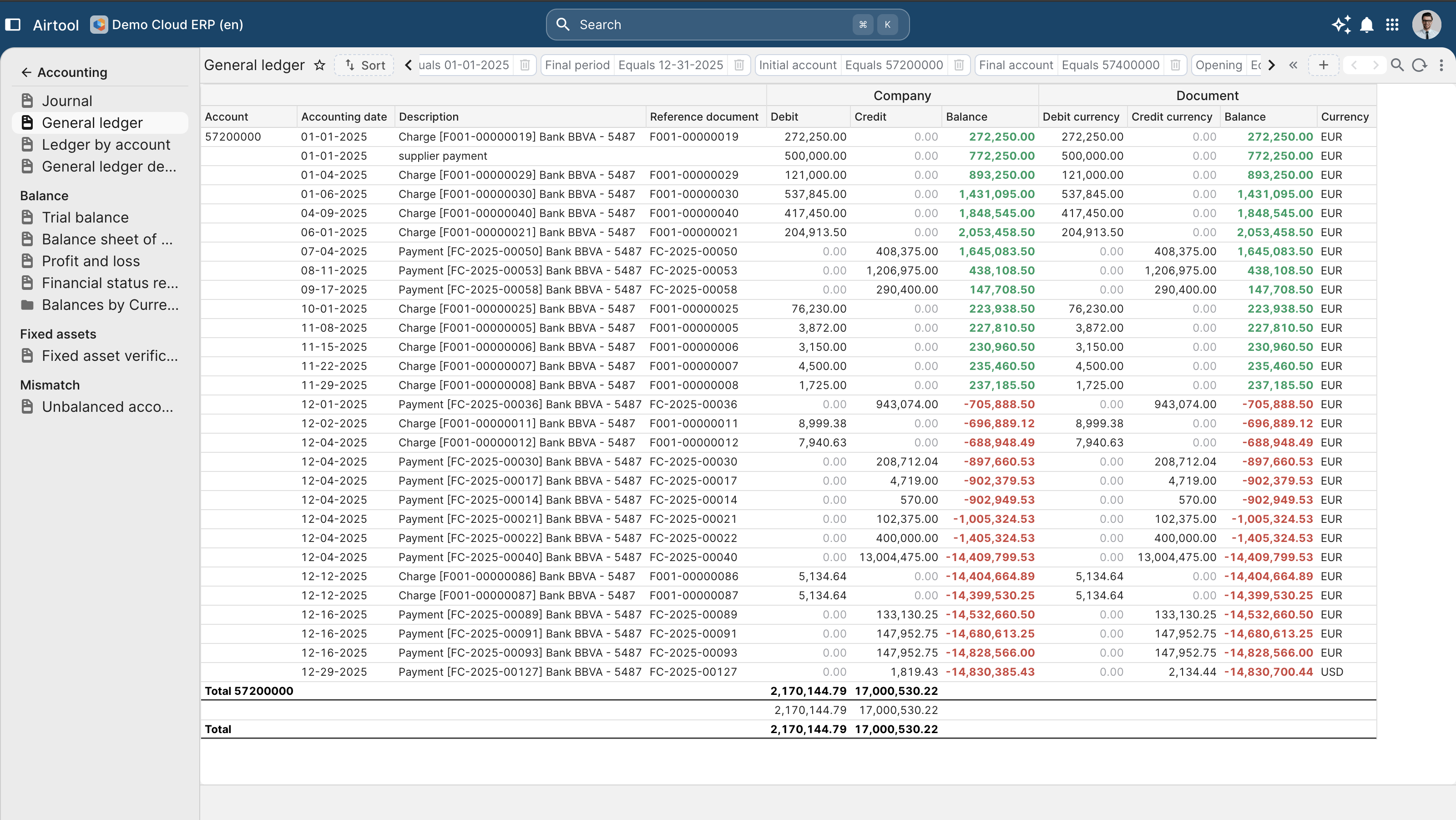
Three-way matching, controlled disbursement, complete trail.
PO, goods receipt and invoice matched on configurable tolerance rules. Exceptions queued for review; matched invoices posted automatically. Per-vendor, per-amount, per-category approval matrices. Approvers act in-system; no email PDF round-trips. Payment runs proposed on due-date and discount criteria, approved by treasury, executed via SEPA, ACH, SWIFT or local bank file with the audit trail attached. Vendor statement matched line-by-line against open AP. Differences flagged for resolution before payment release.
- Three-way matching — PO, goods receipt and invoice matched on configurable tolerance rules. Exceptions queued for review; matched invoices posted automatically.
- Approval workflow — Per-vendor, per-amount, per-category approval matrices. Approvers act in-system; no email PDF round-trips.
- Payment proposal and execution — Payment runs proposed on due-date and discount criteria, approved by treasury, executed via SEPA, ACH, SWIFT or local bank file with the audit trail attached.
- Vendor statement reconciliation — Vendor statement matched line-by-line against open AP. Differences flagged for resolution before payment release.
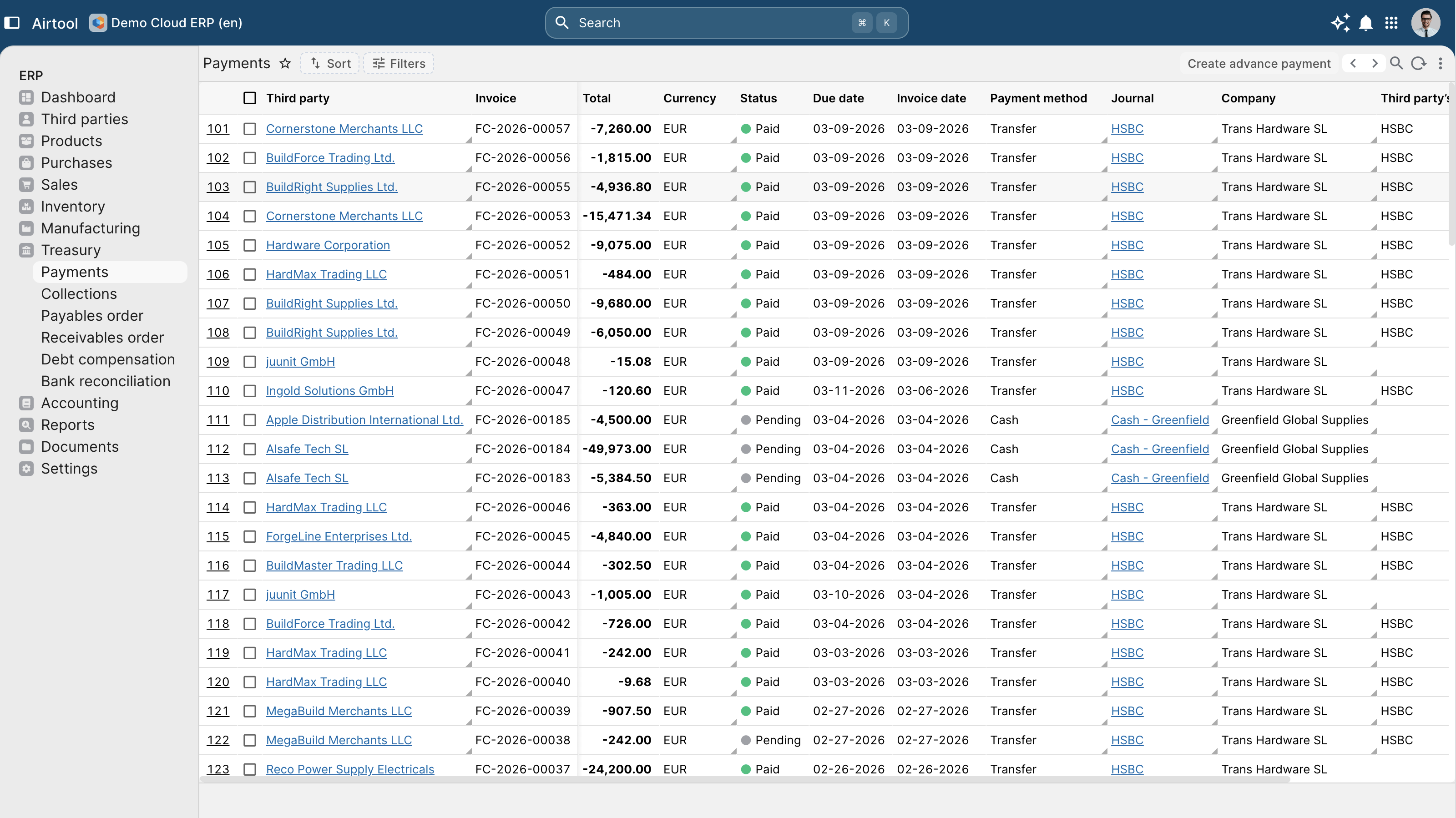
Invoicing, collections, cash application — under one process.
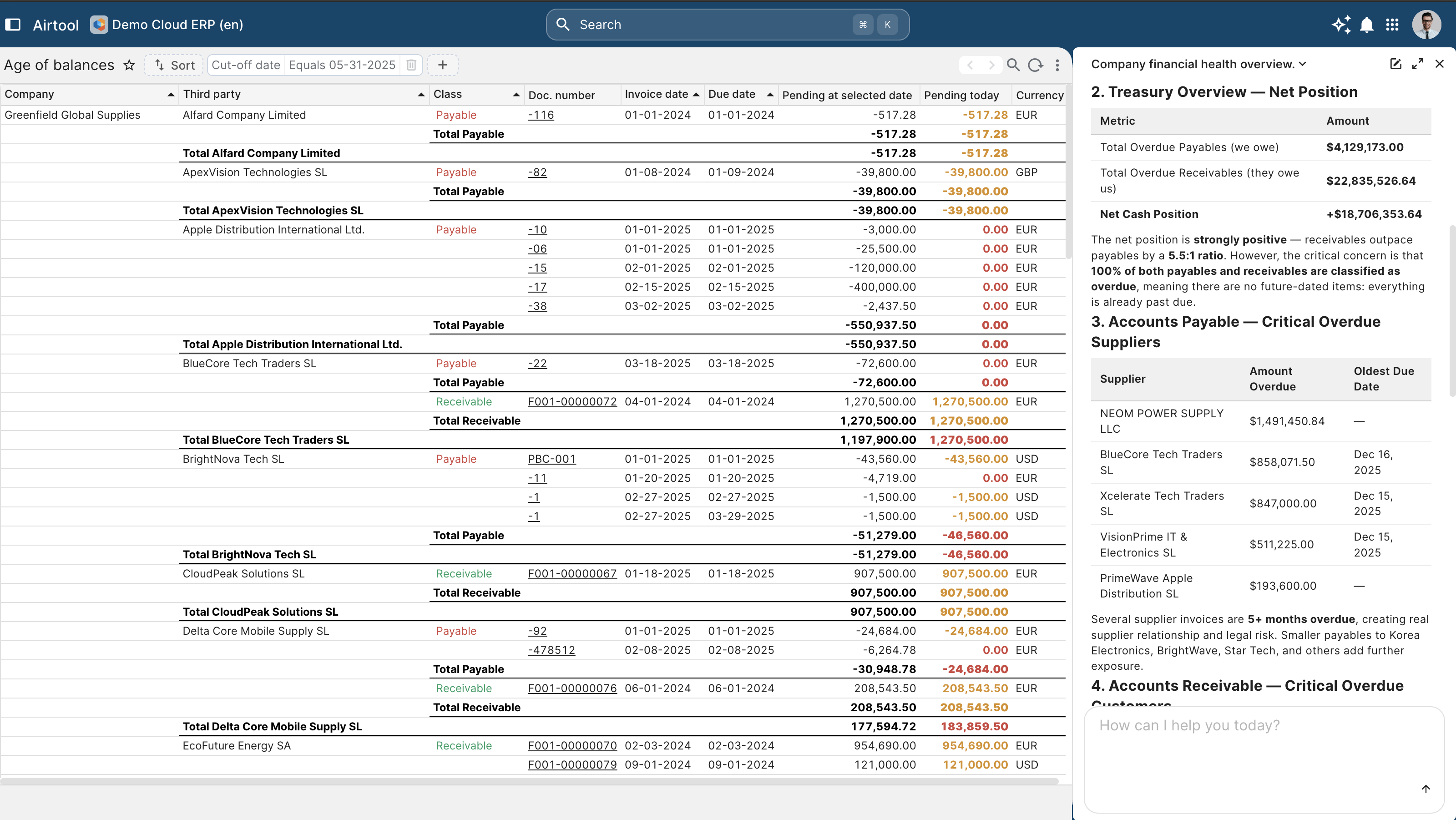
Statutory-format invoices generated from confirmed orders. Channel delivery — email, customer portal, EDI — configured per customer. SEPA Direct Debit, card-on-file, and bank-statement matching for cash application. Reconciliation is structural; no end-of-day batch. Configurable dunning ladders by customer segment. Reminders, statements and escalation steps issued from the same system, against the same customer record. Live AR ageing at the customer, segment and entity level. Drill-through from total to invoice to underlying sales order.
- Invoice generation and dispatch — Statutory-format invoices generated from confirmed orders. Channel delivery — email, customer portal, EDI — configured per customer.
- Direct debit, card and bank capture — SEPA Direct Debit, card-on-file, and bank-statement matching for cash application. Reconciliation is structural; no end-of-day batch.
- Collections workflow — Configurable dunning ladders by customer segment. Reminders, statements and escalation steps issued from the same system, against the same customer record.
- Aged-debtor reporting — Live AR ageing at the customer, segment and entity level. Drill-through from total to invoice to underlying sales order.
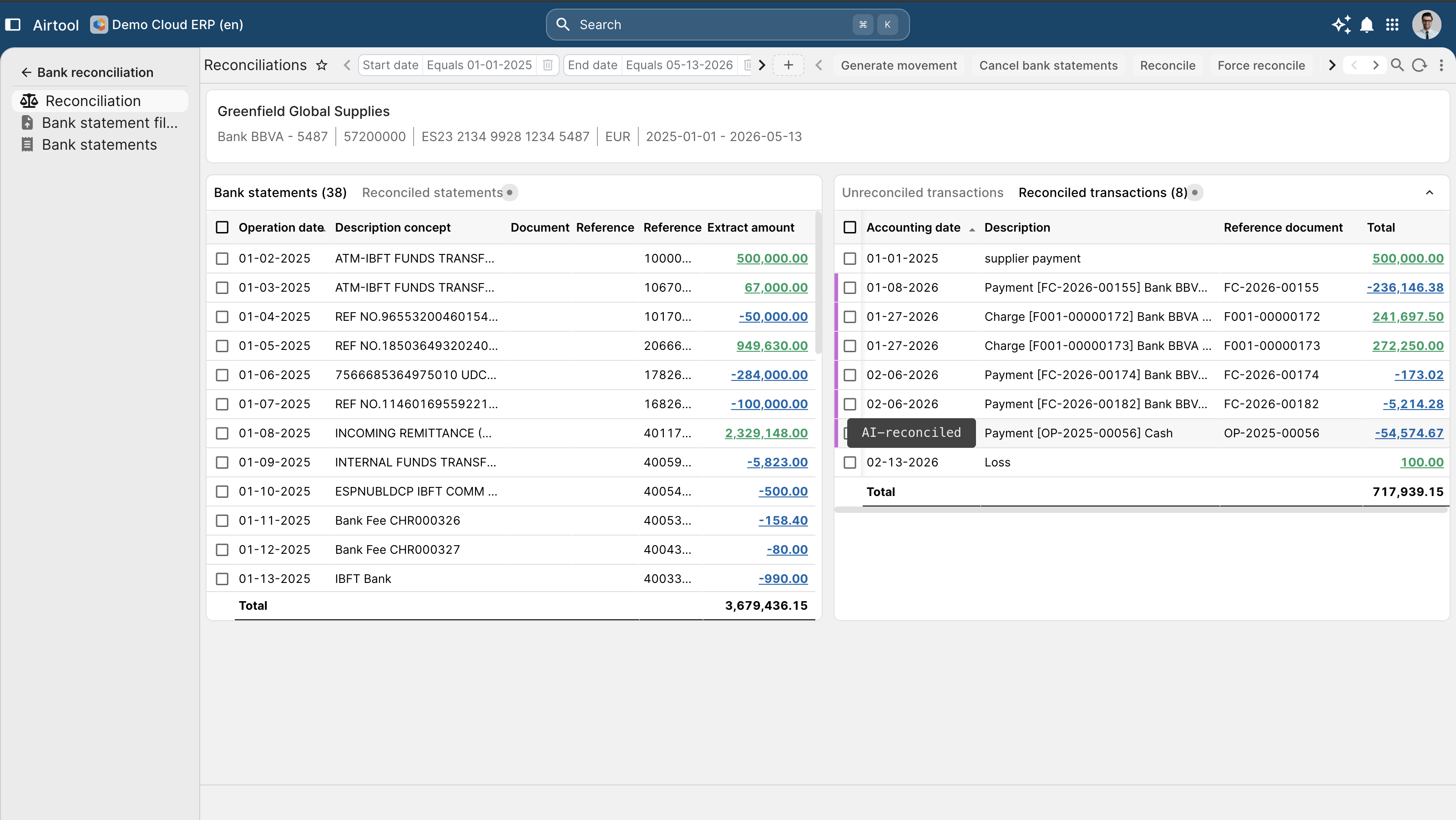
Forward-looking finance, not just backward-looking accounting.
Budgets configured per cost-centre, department, project and account. Actuals reported against budget on every drill-through. Base, upside, downside scenarios maintained alongside the budget. Scenario impact on cash, P&L and headcount visible side-by-side. Live cash projection consuming open AP, AR, payroll cycles and CAPEX commitments. Updates as new transactions post. Variance analysis with preparer commentary on each line. The management report is a query against the same data, not a separate deliverable.
- Budget against live dimensions — Budgets configured per cost-centre, department, project and account. Actuals reported against budget on every drill-through.
- Forecast scenarios — Base, upside, downside scenarios maintained alongside the budget. Scenario impact on cash, P&L and headcount visible side-by-side.
- 13-week cash flow projection — Live cash projection consuming open AP, AR, payroll cycles and CAPEX commitments. Updates as new transactions post.
- Variance and commentary — Variance analysis with preparer commentary on each line. The management report is a query against the same data, not a separate deliverable.
Statutory output and auditor evidence from the same system that runs the business.
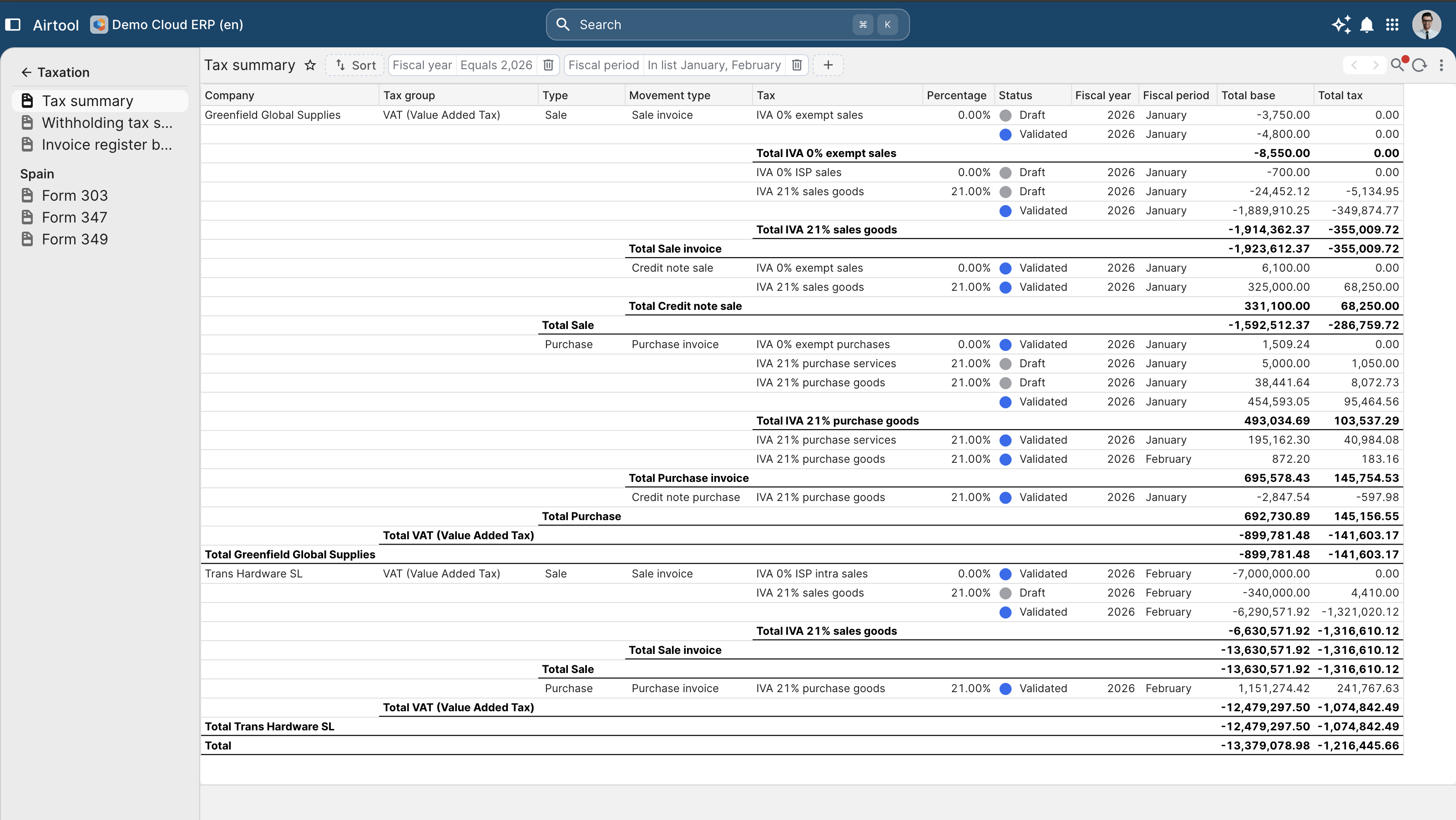
Per-country chart-of-accounts mappings, statutory format reports, regulator-filing exports. Configured once per jurisdiction. VAT, GST, sales tax, reverse charge, intra-community supply and withholding rules configured per jurisdiction and transaction type. Output reconciles to the ledger by construction. Any historical period reproducible — same ledger state, same approvals, same supporting documents — for the auditor's working file. Salary, customer identifiers and financial-detail fields masked per role. The role-based mask is enforced at the compiler, not at the screen.
- Jurisdiction-specific statutory reports — Per-country chart-of-accounts mappings, statutory format reports, regulator-filing exports. Configured once per jurisdiction.
- Tax engine — VAT, GST, sales tax, reverse charge, intra-community supply and withholding rules configured per jurisdiction and transaction type. Output reconciles to the ledger by construction.
- Audit pack reproducibility — Any historical period reproducible — same ledger state, same approvals, same supporting documents — for the auditor's working file.
- Sensitive-field masking — Salary, customer identifiers and financial-detail fields masked per role. The role-based mask is enforced at the compiler, not at the screen.
Built on the supervised platform.
Every financial-management capability above runs on the same supervised runtime that runs every other Airtool application. Multi-tenancy, audit trail, role-based access, observability — inherited from the platform core, not built into ERP-specific code. The finance team operates the application; the platform carries the enterprise plumbing.