What this means for the organisation
An enterprise adopting AI agents faces one question from its
security office, its auditors and its procurement team : what,
exactly, can the agent do, and who answers for it. Most AI
integrations cannot answer it, because the agent holds a
service credential and the application is asked to filter.
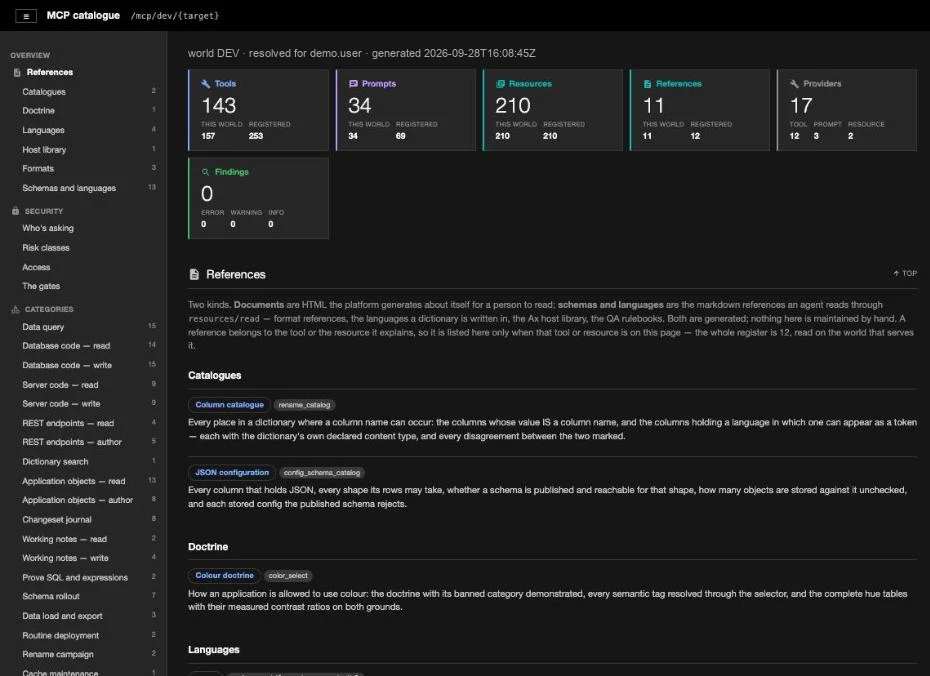
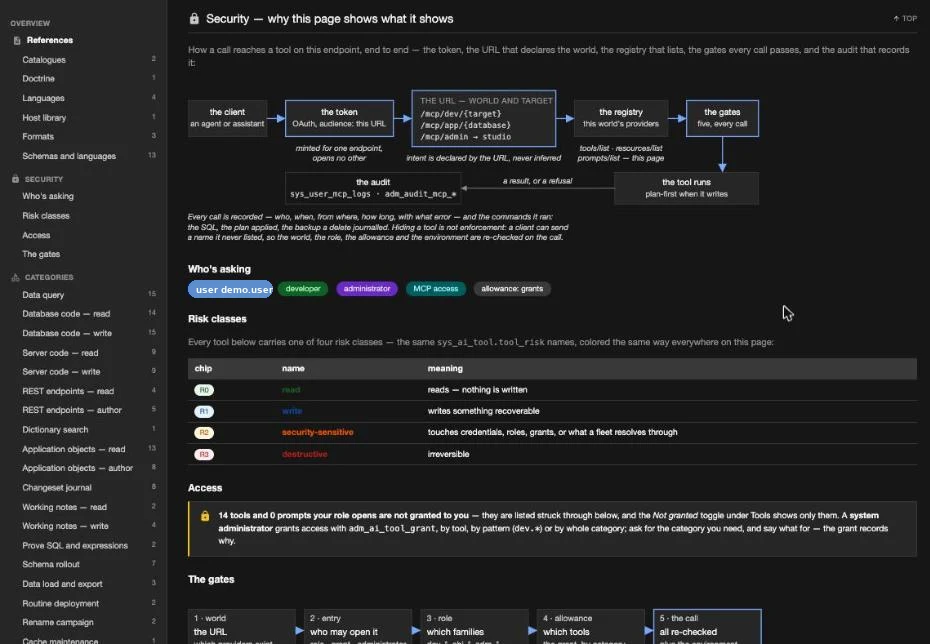
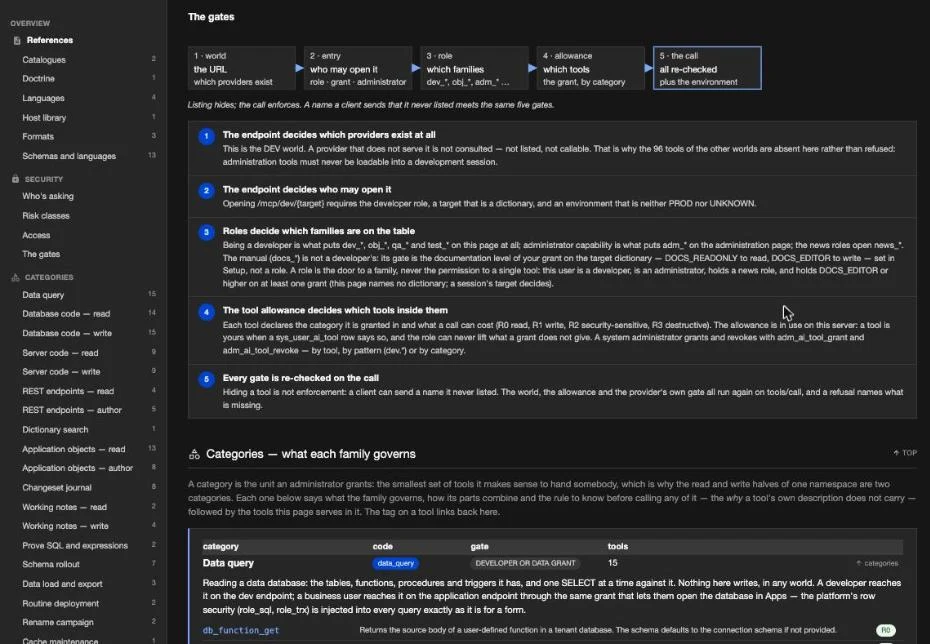
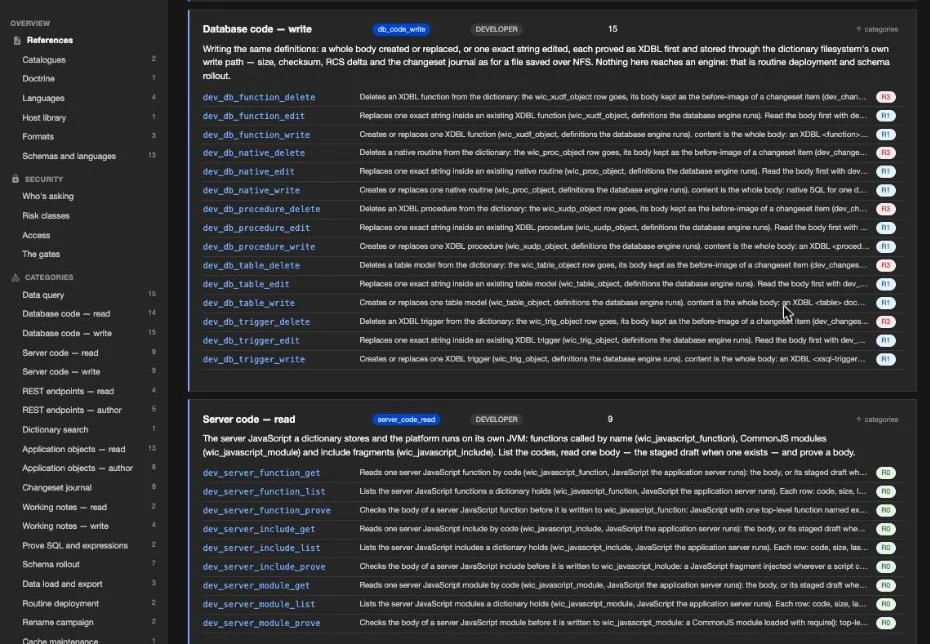
Airtool answers it with a catalogue. Every tool an agent may
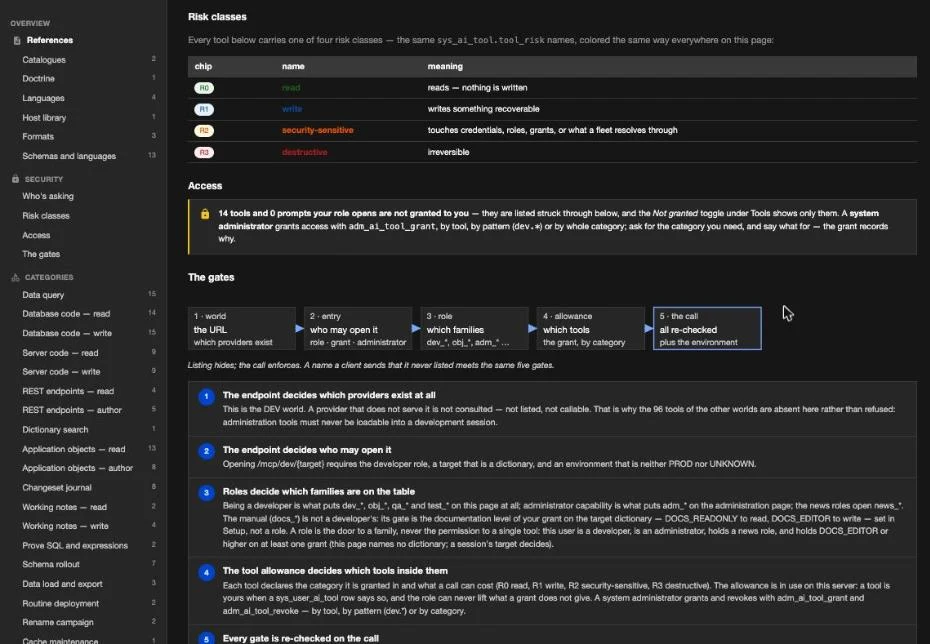
call is registered with a category, a risk class and a
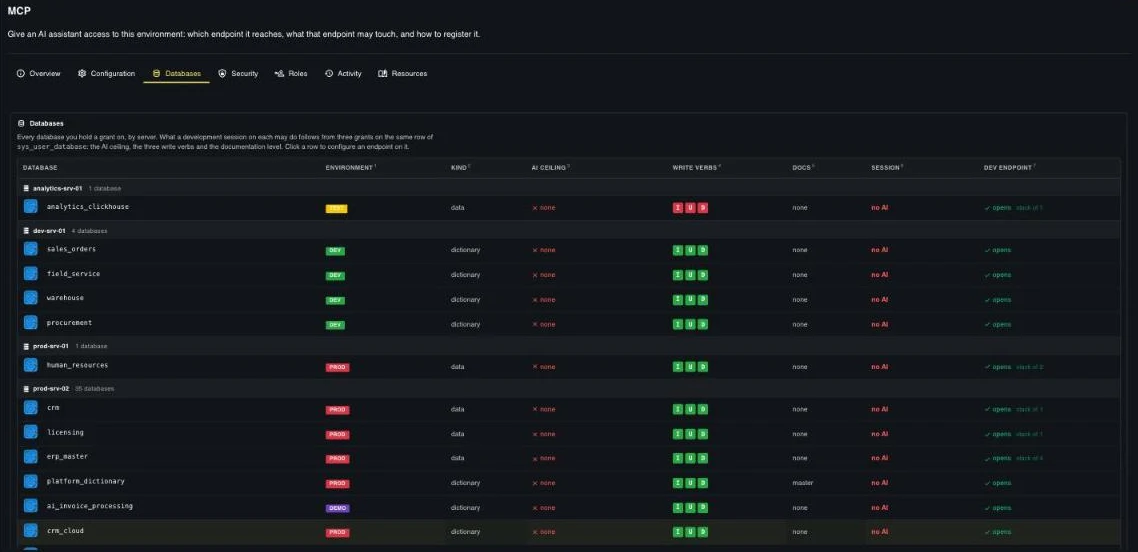
description of what it governs ; every category is granted by
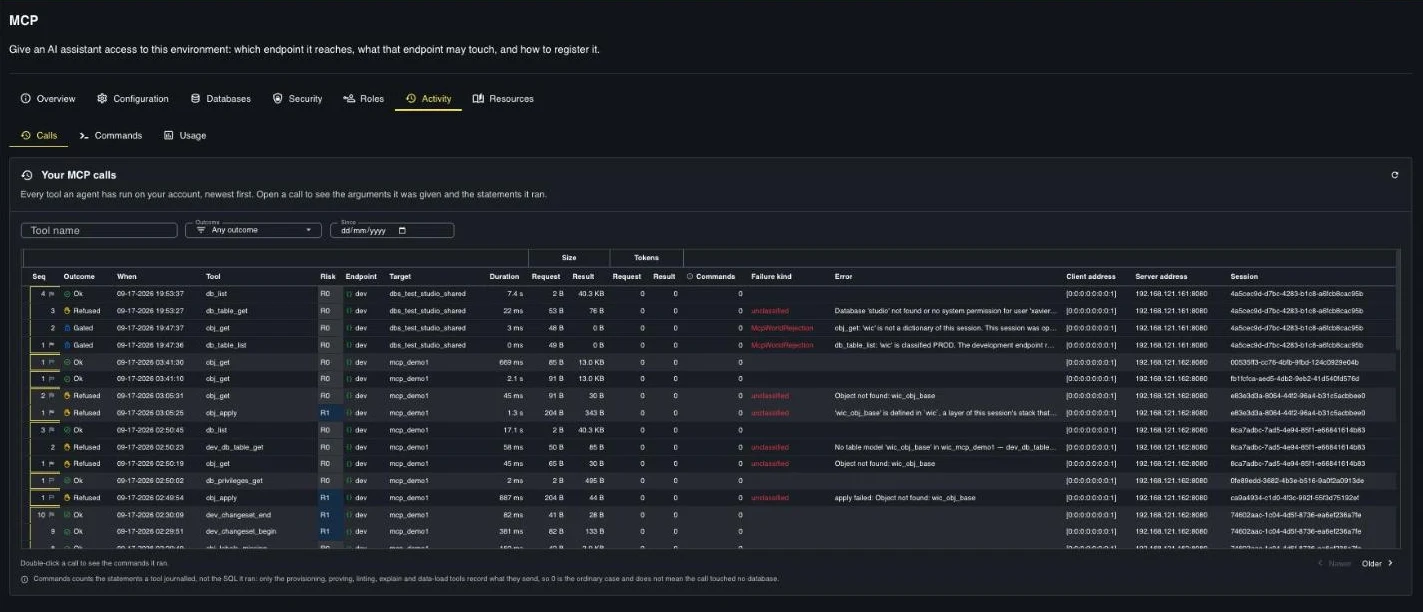
an administrator who records why ; every call is written to the
audit with the commands it ran. The contract between the
organisation and its agents is a document the platform
generates about itself, resolved for the person who asks.
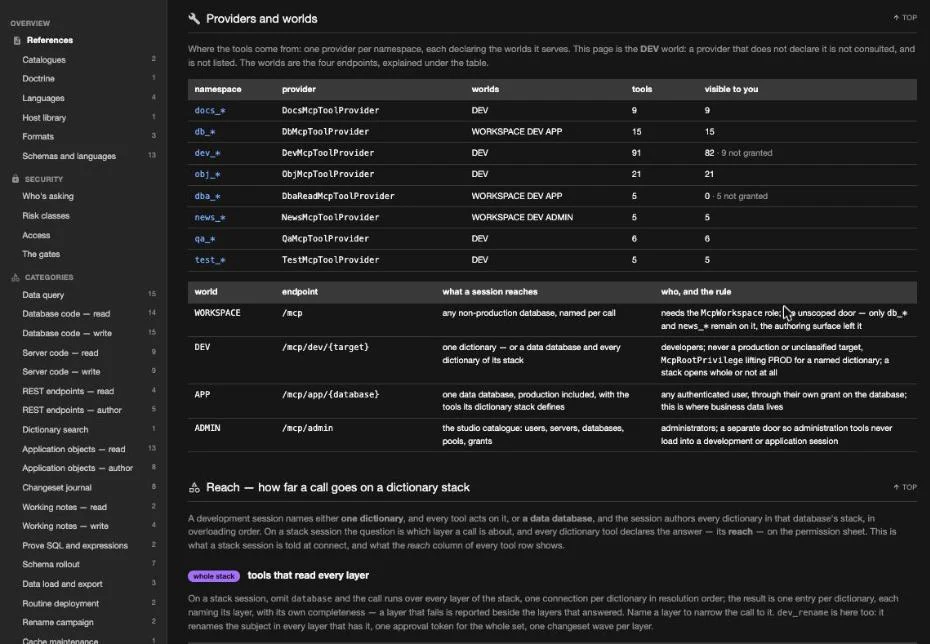
The four worlds give the organisation a vocabulary for blast
radius. A development agent authors and proves application code
on a test dictionary and cannot see production. A business
user's assistant works on one data database through that user's
own grant, with the same row security a form applies. An
administration agent operates the fleet through a separate door
that a development session can never open. The risk classes
give the same vocabulary for policy : an organisation can hand
its agents every read tool on day one, grant recoverable writes
by category as trust is earned, and keep destructive and
security-sensitive tools under explicit, recorded grants.
The write discipline is what makes delegation safe. A change is
proved before it is written, reported before it is applied,
journalled with its before-image, restorable from the journal,
refused on the wrong environment, and refused while a person is
editing the same body. These are the rules an engineering team
applies to itself ; the platform applies them to the agent
mechanically, on every write. The engineer and the agent author
the same governed record, and the platform does not care which
of them produced the change — it governs both identically.
The structural advantage exists because applications on Airtool
are metadata, not files. Forms, endpoints, roles, scheduled
jobs, routines and audit trails are records in the metadata
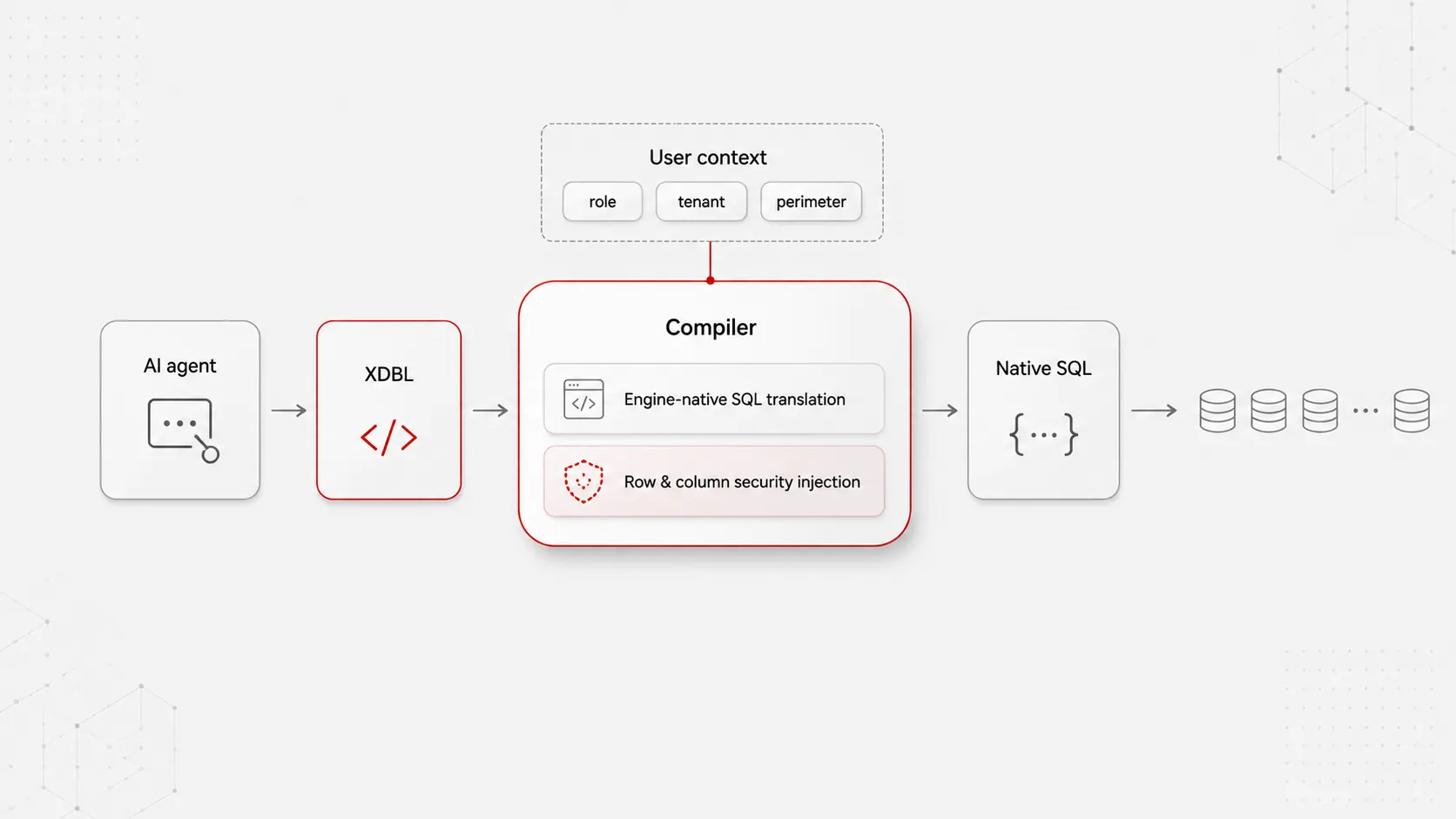
repository. The compiler owns every path to the data because
there is no parallel path. A constrained metadata record is
governable in a way arbitrary generated code is not — which is
why the agentic era is an argument for this runtime, not a
threat to it.