A manual that lives in the product is edited by engineers, by writers and now by models. This release makes all three edits safe: proposed, shown, accepted or discarded, and journalled.
Editing
- AI review as a diff The user's default chat model proposes a rewrite of a page or one section from an instruction. The result is a diff with line counts and schema warnings, and four buttons: change the prompt, retry, discard, accept. Nothing is stored until accepted, and accepting is one undoable edit. Rules keep anchors, references and code and forbid invented facts.
- A design panel Outline, sections as cards with blocks as rows to move, add, delete or nest, assets with usage, and the XML. Each change saves through the page's own validation and is rolled back when refused; the XML is spliced so untouched text stays byte for byte.
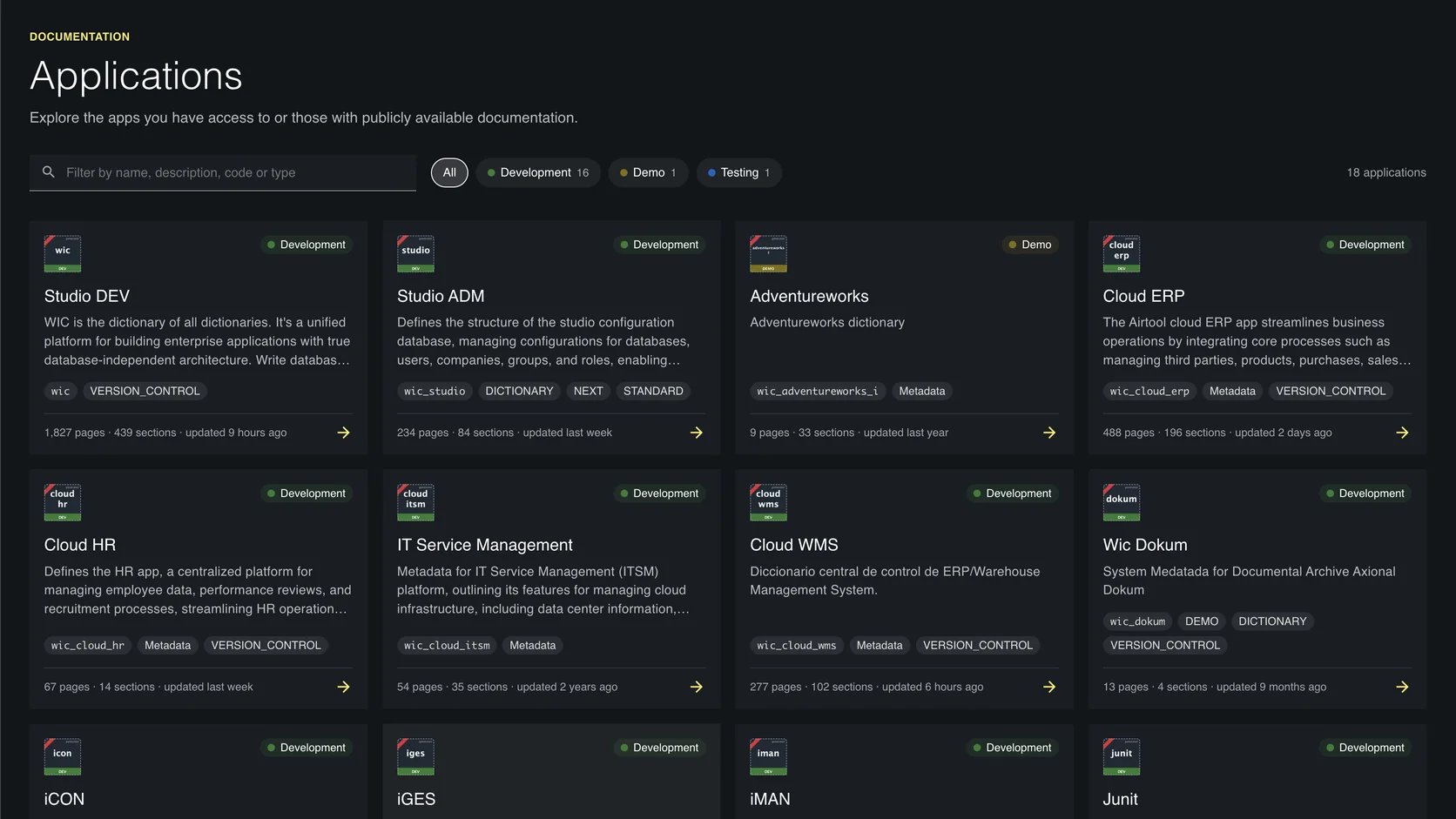
- Tiles The home lists dictionaries as Carbon tiles with environment, counts and last update, under a live filter.
Tools
- Edit one string A documentation tool replaces one exact string in a page, dry-run by default, proved against the schema, stored as one journal item. A typo no longer re-sends the whole page.
- List sections cheaply One line per section with a depth cut: the platform manual's 84 sections and 234 pages dropped from 5,122 tokens to 2,293, and to 1,008 without pages.
- Grep by row The dictionary grep groups hits by row and column and stops reading the manual's history, so thirty hits cost about 1,100 tokens instead of 20,000.
The catalogue the Docs app reads is now generated from the code at build time, so the manual is as current as the jar it ships in.